The Complete Eczema Flare Playbook: Early Warning Signs, Rescue Steps, and Spotting Infection
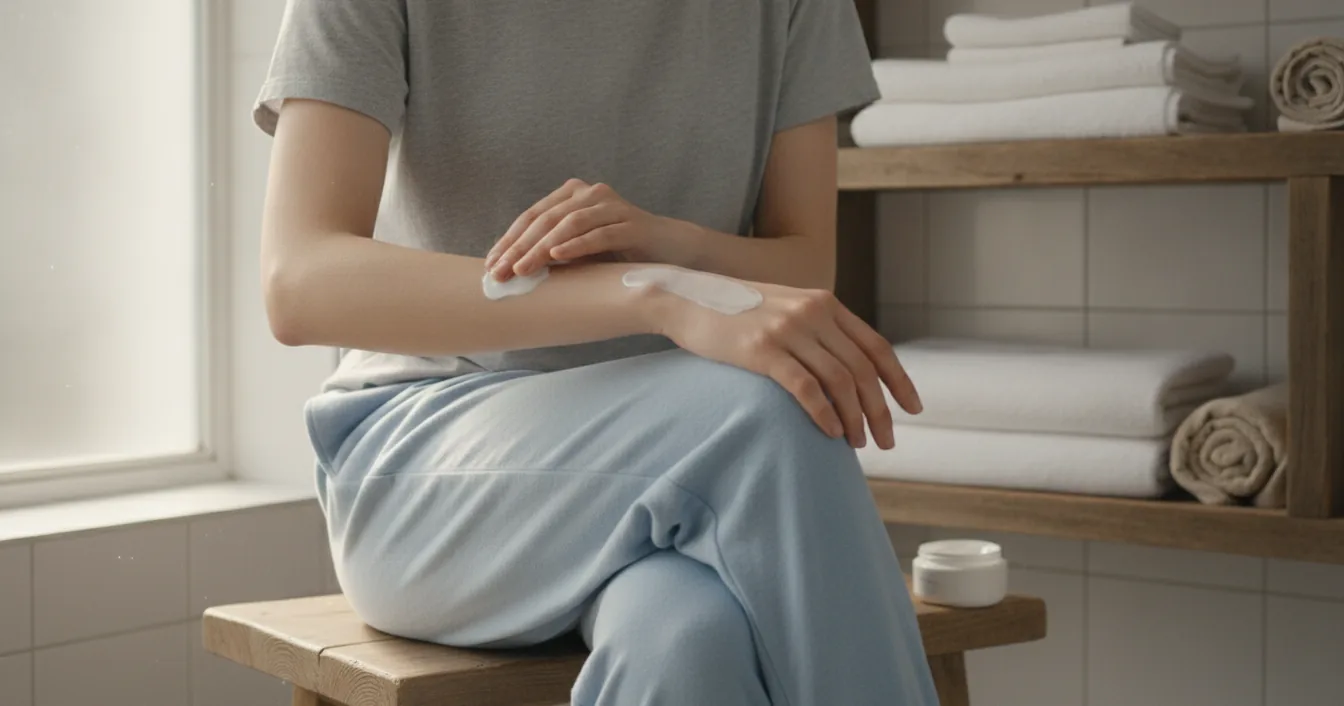
Nobody makes good decisions about their skin at two in the morning. That is the entire argument for reading this on a calm day rather than a bad one. A flare is a bad night, a scramble through the bathroom cabinet, and a set of choices made while exhausted and itching. A playbook turns all of that into a sequence you already decided on, back when you were thinking clearly.
Flares start before you can see them
The flare you notice on Thursday usually began on Tuesday. Skin barrier function drops, water escapes faster, inflammation builds under the surface, and only then does the rash arrive. That gap is the most useful window you have, because calming skin that is only starting to turn is far easier than reversing skin that is already raw.
The early signals are subtle and personal, but most people have the same handful:
- Itch with nothing to show for it. Itch that arrives before any visible rash is the classic prodrome.
- A sandpaper feel at your usual sites. Run a hand over the inner elbows, behind the knees, wrists, neck, or eyelids. Roughness comes before redness.
- A color change that is easy to miss. On lighter skin this reads as faint pink. On brown and Black skin a flare often shows as grey, purple, or darker brown rather than red, which is one reason early flares get overlooked entirely.
- Moisturizer that suddenly stings. A product you have used for months burning on application means the barrier is already compromised.
- Tightness after washing that does not settle within a few minutes.
- A restless night. Scratching in your sleep, or a child who wakes more than usual, frequently arrives a day or two before anything looks wrong.

Learn your own two or three tells and treat them as the trigger to start the routine below, not as something to monitor for another day.
The rescue routine, step by step
The goal for the first 48 hours is simple: put moisture back, damp the inflammation down, and remove whatever is making it worse. In that order of effort, not glamour.
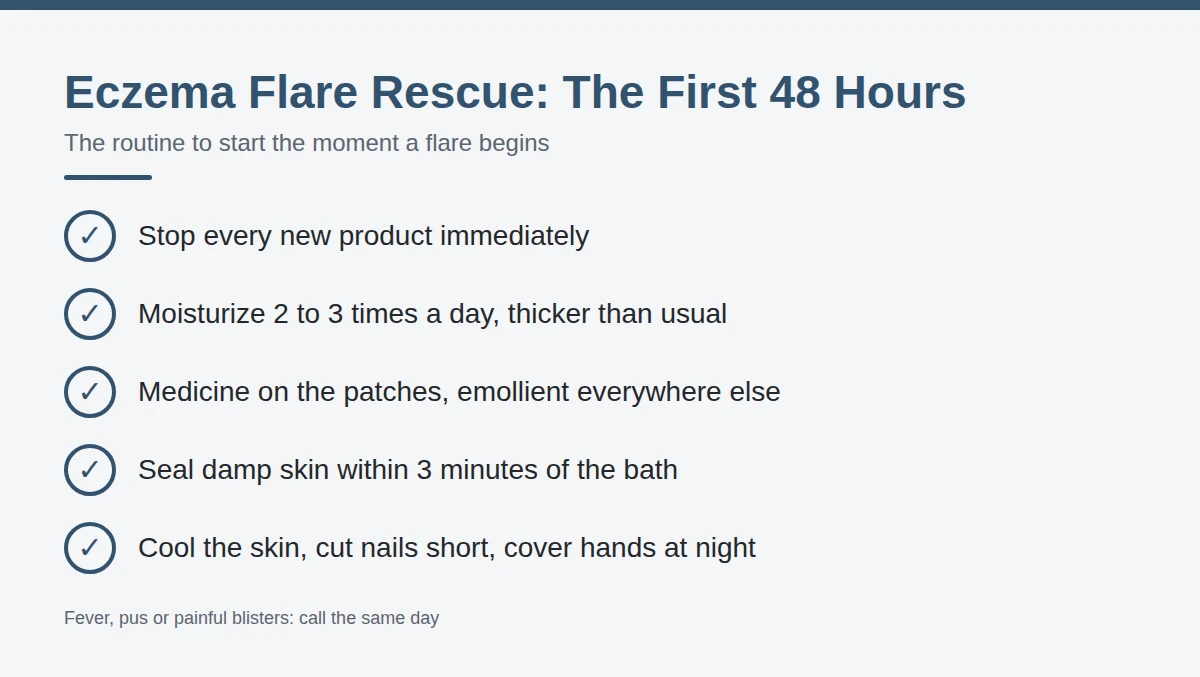
1. Strip the variables. Stop every new product immediately, including the one you were excited about. New detergent, new soap, new sunscreen, or a hotel shampoo can all sit behind a flare, and a genuine allergic contact dermatitis will not settle until the culprit is gone. Then look back at the previous week for the usual suspects: heat and sweat, a cold or a stomach bug, a stressful stretch at work, travel, wool, or a hot bath.
2. Increase the moisturizer, dramatically. Not the same amount more carefully. Two to three times a day minimum, and thicker than usual. An ointment or a heavy fragrance-free cream holds water in better than a lotion, which is mostly water itself and evaporates. Adults with widespread eczema can reasonably get through a 500g tub in a couple of weeks during a flare, and most people use far less than they should.
3. Put the medicine on first, moisturizer over the top. Apply your prescribed anti-inflammatory to the affected patches, then emollient everywhere else. If your dermatologist gave you a specific order or a waiting gap between the two, theirs wins over any general advice, including this article.
4. Use enough of the topical steroid, for long enough. Undertreating is a much more common error than overtreating. The standard measure is the fingertip unit: the amount squeezed from the tip of an adult index finger to the first crease, which covers roughly two adult palms of skin. Keep going until the skin is genuinely smooth rather than merely less angry, and follow your prescriber’s instructions on stepping down. Stopping the day the redness fades is what produces a rebound flare a week later.
5. Cool everything down. Heat drives itch. Warm rather than hot showers, a cool bedroom, cotton instead of synthetics or wool, and a cold pack wrapped in a cloth held against the worst patches for a few minutes.
6. Defend the skin from your own nails. Cut them short and file them smooth. Cotton gloves or socks over the hands at night are not a childish measure, they are the difference between waking up healing and waking up bleeding.
Soak and seal, done properly
Soak and seal is the technique that makes everything else work, and almost everyone does a version of it that quietly leaks most of the benefit.
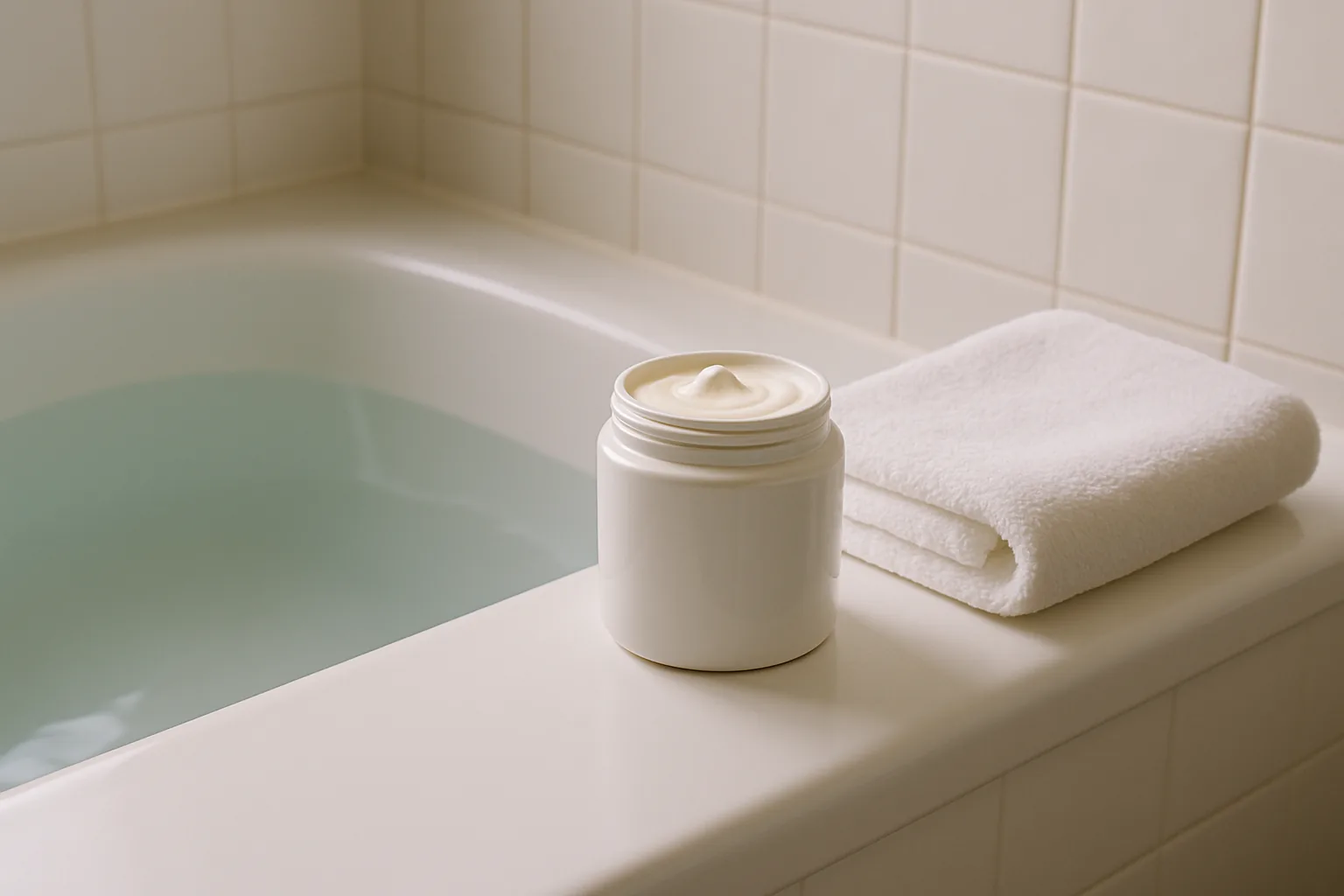
- Bathe or shower in lukewarm water for about 10 minutes. Hot water feels wonderful on itchy skin and strips lipids from the barrier while it does.
- Use a mild, fragrance-free, non-soap cleanser, and only where you actually need it. Skip the bubble bath.
- Pat dry, do not rub, and stop while the skin is still slightly damp.
- Apply medication to the affected areas.
- Seal with a thick moisturizer over the whole body within about three minutes, while that surface water is still there to trap.
- Dress in soft cotton.
Our older piece on bathing to soothe irritated skin covers the water temperature and cleanser side in more depth. The three minute rule is the part to remember: past that point you are moisturizing dry skin instead of sealing damp skin, and the effect is not the same.
Wet wraps, and when they are worth it
Wet wrap therapy is the strongest home tool in the playbook. After the medication and moisturizer go on, you cover the area with a damp layer (tubular bandage, cotton pajamas, or clean damp towels), then a dry layer over the top. Leave it for a couple of hours or overnight.
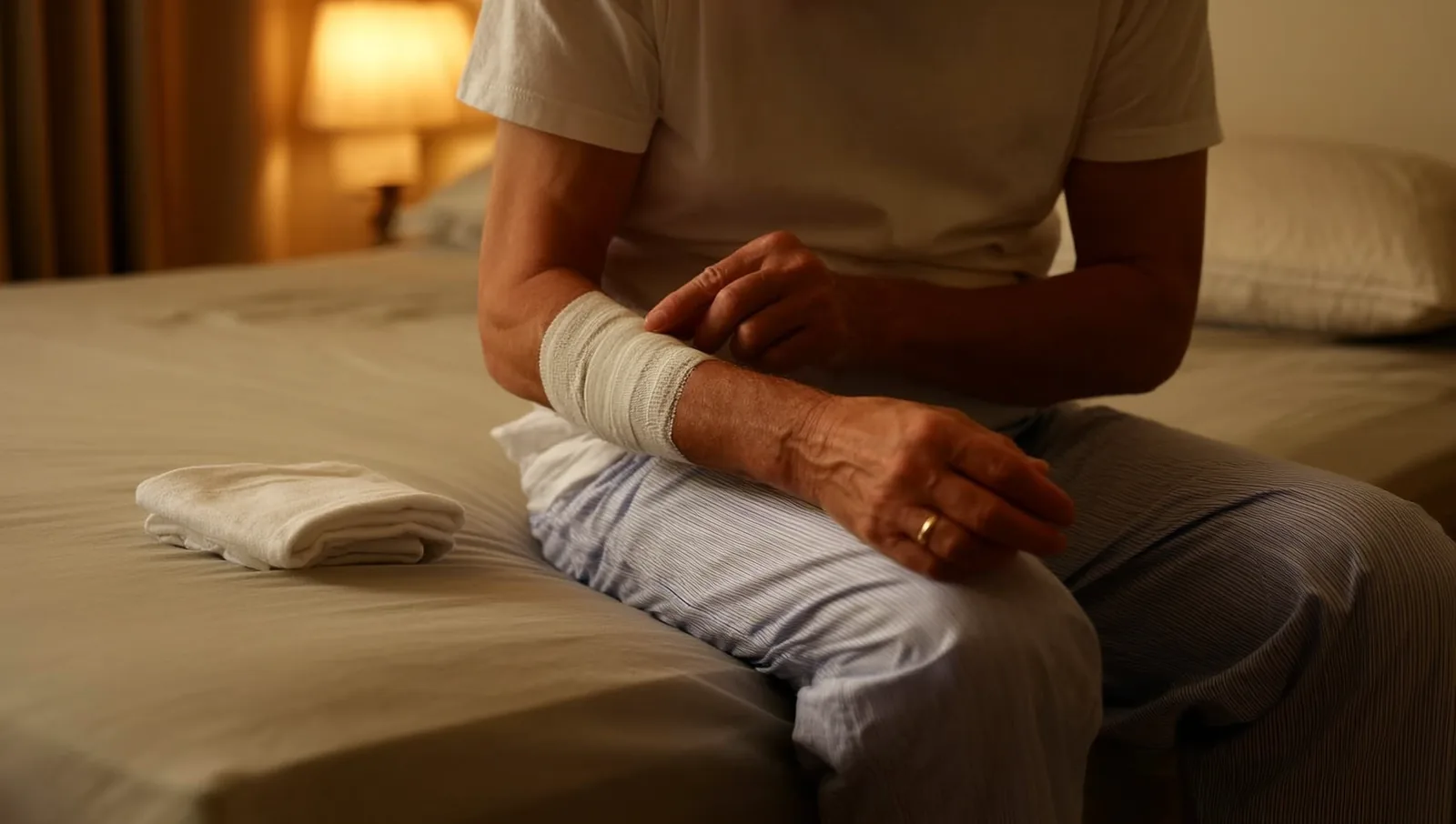
It works because occlusion drives hydration into the skin, cools the surface, physically blocks scratching, and substantially increases absorption of whatever topical is underneath. That last point cuts both ways. Increased steroid absorption is exactly why wet wraps break a stubborn flare, and exactly why you should ask your dermatologist before wrapping over a potent steroid, particularly on a child or over large areas. Wet wraps are a short intervention of a few nights, not a routine you settle into for a month.
One firm rule: do not apply wet wraps to skin you suspect is infected. Warm, occluded, broken skin is an excellent environment for bacteria.
Controlling the itch when it will not stop
Scratching is not a willpower failure, it is a reflex loop. Scratching activates nerve fibers in the skin and makes the itch worse, so the useful strategies are the ones that interrupt the loop rather than the ones that demand more self-control.
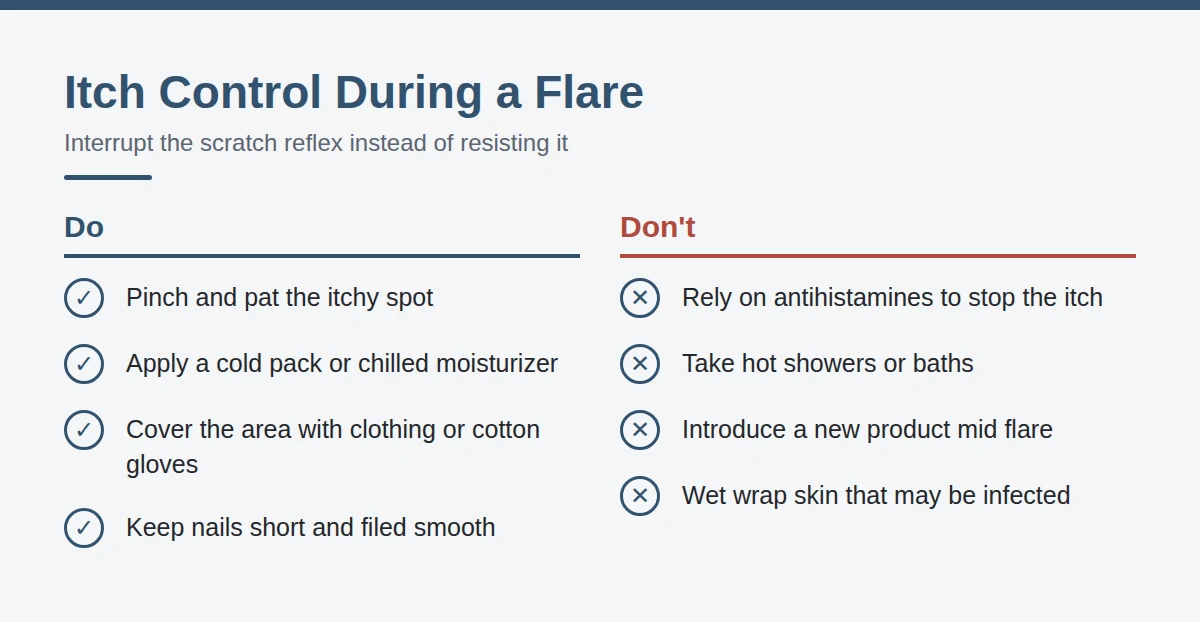
- Pinch and pat instead of scratching. The National Eczema Association’s substitution genuinely helps, and it works for children too.
- Cold beats cream for acute itch. A cold pack, a cool damp cloth, or a chilled moisturizer straight from the fridge.
- Cover the area. Clothing, a bandage, or gloves put a physical barrier between the urge and the skin.
- Treat stress as a trigger, not a personality flaw. Stress reliably worsens itch, and flare plus sleep loss plus stress is a self-feeding cycle.
- Do not expect much from antihistamines. A large evidence review found they do not meaningfully reduce eczema itch, which we covered in why antihistamines do not stop eczema itch. A sedating one may help you sleep on a rough night. That is a different claim from treating the itch.
When the skin starts to weep
Weeping is fluid, clear or yellowish, leaking from eczema patches or from blisters that have burst. It is distressing to look at, and it is not automatically an infection. It usually means the flare is severe enough that the current plan is not holding.
Handle it gently. Cleanse the weeping area up to twice a day with warm water and a mild fragrance-free cleanser, pat dry, and keep applying the treatment your dermatologist prescribed. Do not introduce a new product mid-flare to see if it helps.
That said, any new or increased drainage from your skin deserves medical eyes, because weeping is also how several infections announce themselves.
Red flags: the point where the home routine stops
This is the part of the playbook to know cold. Broken eczema skin is unusually easy to infect, and the reflex to reach for a stronger steroid is wrong in every row of this table.
| What you see | What it suggests | What to do |
|---|---|---|
| Honey-colored or yellow crusting, pus, increasing pain, warmth or swelling | Bacterial infection, commonly staph or impetigo | Call the same day, expect topical or oral antibiotics |
| Clusters of same-sized blisters, round punched-out sores, pain rather than itch, fever | Eczema herpeticum | Urgent same-day care, oral antiviral, not a steroid |
| Fever, chills, swollen glands, or feeling genuinely unwell | Infection spreading beyond the skin | Urgent care or emergency department |
| Any blistering or sores on or near the eyelids | Possible eye involvement | Same-day, treat as an emergency |
| A flare that ignores the routine that normally works | The treatment plan needs reviewing | Book with your dermatologist |
Eczema herpeticum is the highest-stakes item on that list and the one most often mistaken for a bad flare, which is why it has its own article. Learn the picture: it hurts rather than itches, the blisters are all the same size, and there is usually a cold sore somewhere in the household.
Bleach baths are maintenance, not rescue
Diluted bleach baths reduce staph on the skin and can lower flare frequency in people who get repeatedly infected. They are a between-flares measure that works alongside medication and moisturizer, not a treatment for an infection you already have.
Mayo Clinic’s protocol is a quarter cup of household bleach in a 20 gallon tub of warm water, or half a cup in a full tub, soaking from the neck down for 5 to 10 minutes, then rinsing, patting dry, and moisturizing immediately. Once or twice a week is the usual frequency. Talk to your doctor before you start, use less if your bleach is at the stronger end of the 6 to 8.25 percent sodium hypochlorite range, and skip it entirely if your skin is cracked or raw, because it will hurt. Bleach-based body washes are a reasonable alternative if a bath is impractical.
When the playbook stops being enough
A rescue routine you run once or twice a year is a plan working as intended. Running it every few weeks is a signal, not a lifestyle. Needing rescue treatment repeatedly, losing sleep regularly, or flaring on skin that never fully clears between episodes all point to eczema that is undertreated rather than to a personal failure of discipline.
Bring evidence to that appointment. Photographs taken in consistent lighting, the dates flares started and how long they ran, what you applied and how much of it you got through, and a tracked severity score. Our guide to SCORAD, EASI and POEM explains how to score yourself at home in about a minute a week, and a POEM trend line does more in a 15 minute consultation than any description of a bad fortnight.
If the flares also do not quite look like the eczema you were told you have, it is worth revisiting the diagnosis. Our guide to the seven types of eczema covers the subtypes that get mistaken for atopic dermatitis and are managed differently.
The bottom line
Catch it early, moisturize far more than feels reasonable, use the prescribed anti-inflammatory properly rather than timidly, cool the skin, protect it from your nails, and know the four or five signs that mean stop and call someone. Write your version down and keep it where you will find it at 2am.
Every case of eczema is different, and none of this replaces assessment by a board-certified dermatologist, particularly when infection is on the table. What a playbook buys you is the calm to act early and the clarity to know when acting alone is no longer the right call.
Further reading (sources)
- American Academy of Dermatology on how to manage wet or weeping eczema
- Mayo Clinic for six ways to manage the itch of atopic dermatitis
- Mayo Clinic with the dilution and timing of an eczema bleach bath
- American Academy of Dermatology on reducing flares with the right moisturizer routine
- Everyday Health with the signs it is time to reassess your eczema treatment
- National Eczema Association with the patient fact sheets on managing a flare