Eczema Herpeticum: Why a Cold Sore Near a Child With Eczema Is an Emergency
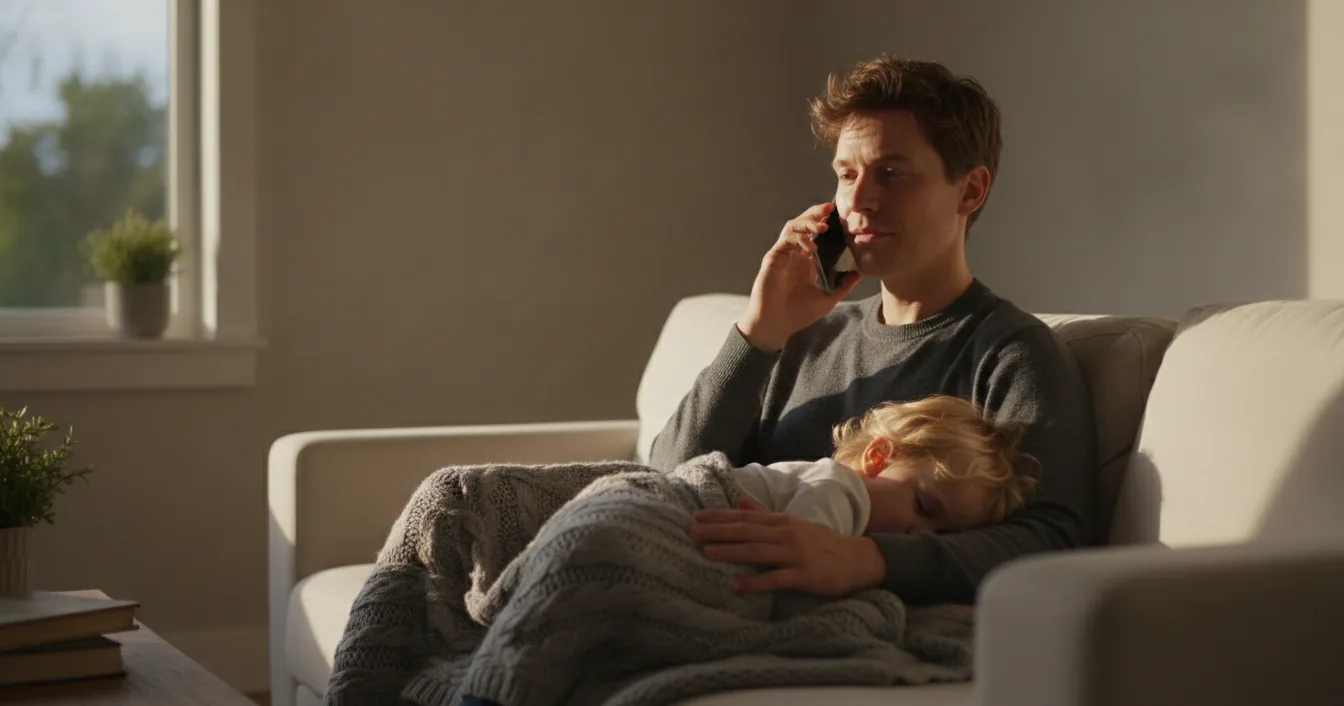
Most of the time a cold sore is a nuisance and nothing more. It tingles, it blisters, it scabs, it goes. But the virus behind it, herpes simplex type 1, behaves very differently when it meets skin that has lost its barrier. In a child with moderate to severe eczema, HSV-1 does not have to stay put on a lip. It can seed itself across every cracked, inflamed patch on the body and become eczema herpeticum, an infection that moves fast enough to put children in hospital.
This is the single highest-stakes recognition task in eczema care. Not because it is common, but because the window in which it is easy to treat is measured in days, and because the instinct most families reach for first, a stronger steroid, actively makes it worse. If you care for a child with eczema, or if you get cold sores and you are ever around one, this is the article to know by heart.
Why broken skin changes everything
Healthy skin is a sealed wall. It keeps viruses, bacteria, and irritants on the outside where they belong. Atopic dermatitis breaks that wall down, leaving microscopic cracks across large areas of the body, which is why barrier repair sits at the center of every eczema plan in our parent’s guide to childhood eczema.
Those same cracks are entry points. When HSV-1 reaches damaged skin, it does not stay confined to one small blister. It spreads through the broken areas, and in a child it spreads faster still. Children have thinner skin and developing immune systems, and the skin’s own antimicrobial defenses are known to work less well in atopic dermatitis than in unaffected skin. Put those three things together and you get the group at greatest risk: children with the most extensive barrier disruption, which usually means moderate to severe, poorly controlled eczema.
Adults with severe eczema can get eczema herpeticum too. It is simply less common and generally less dramatic than in a young child.
What it actually looks like
The rash has a specific look, and learning it is worth more than any general advice about “watching for infection.”
Symptoms usually begin 5 to 12 days after exposure to the virus. Look for:
- Clusters of small blisters that are all roughly the same size. This uniformity is the tell. An ordinary flare is irregular. These look stamped on.
- Punched-out erosions. Once the blisters break, they leave shallow round sores that look like hole-punch marks. Clinicians call them punched-out erosions, and they are the classic sign.
- Pain rather than itch. This is the change parents notice first. Eczema itches. Eczema herpeticum hurts.
- Blisters that ooze pus, then crust over as older lesions dry.
- Fever, chills, and swollen lymph glands. A child who suddenly seems genuinely unwell, listless, and refusing to eat or drink is telling you something a rash alone would not.
- Colour that reads as red, purple, or almost black, depending on skin tone, and generally more dramatic than that child’s usual flare.
The distinction that matters most, in one line: a bad eczema flare is itchy, dry, and inflamed with no fever and no blisters. Eczema herpeticum is painful, blistered, and comes with whole-body symptoms.
One more clue that is easy to overlook. Check the faces of everyone in the house. A cold sore on a parent, a grandparent, or an older sibling in the week before the rash appeared turns a suspicion into something close to a diagnosis.
Flare or infection: a quick comparison
| Eczema flare | Eczema herpeticum | |
|---|---|---|
| Main sensation | Itch, sometimes intense | Pain, often severe |
| Blisters | Not usually | Yes, in same-sized clusters |
| After blisters break | Not applicable | Round punched-out sores, pus, crusting |
| Fever and chills | No | Common |
| Lymph glands | Normal | Swollen |
| Onset | Builds over days or weeks | Rapid, often within 24 to 48 hours |
| What helps | Emollients, topical anti-inflammatories | Oral antiviral medicine, urgently |
If your child’s “flare” is not responding to the routine that normally works, that is itself a warning sign worth a phone call.
Why a stronger steroid is the wrong reflex
When a rash suddenly worsens, the trained instinct of most eczema families is to step up the topical steroid. Here that instinct is dangerous.
Topical corticosteroids do nothing against a virus, and by damping the local immune response they can help the infection spread further across the skin. The same caution applies to topical calcineurin inhibitors. If you suspect eczema herpeticum, stop applying anti-inflammatory creams to the affected area and call a doctor rather than escalating on your own.
It is also worth knowing what will not help: an oral antihistamine. Because the dominant symptom here is pain rather than itch, a sedating antihistamine simply masks how unwell a child is. As we covered in the evidence review on why antihistamines do not stop eczema itch, they are a weak tool even for ordinary flares, and here they are the wrong tool entirely.
The right treatment is an oral antiviral, usually aciclovir or valaciclovir. Started early it is highly effective. Delayed, the infection can become widespread, and in rare cases it spreads beyond the skin.
What same-day care looks like
Call your pediatrician or pediatric dermatologist the same day symptoms appear. Depending on how extensive the rash is and how unwell the child seems, you may be sent to urgent care or the emergency department so antiviral treatment can start without waiting for an appointment slot.
Most of the time the diagnosis is made by eye. Sometimes a swab from a blister goes to the lab to confirm it, but treatment should not wait for the result.
Two situations need faster action than a routine same-day call:
- Any lesion on or near the eyelids. Herpes infection of the eye is a genuine emergency and needs an ophthalmologist urgently, not a next-day appointment.
- A child who is drowsy, not drinking, or has a high fever. Treat that as an emergency department visit.
Do not let anyone talk you into “watch it overnight” if the picture fits. Overnight is exactly the window in which this spreads.
Household rules when someone has a cold sore
Prevention here is mostly social, not medical, and it asks something genuinely awkward of adults who love the child. Ask anyway.
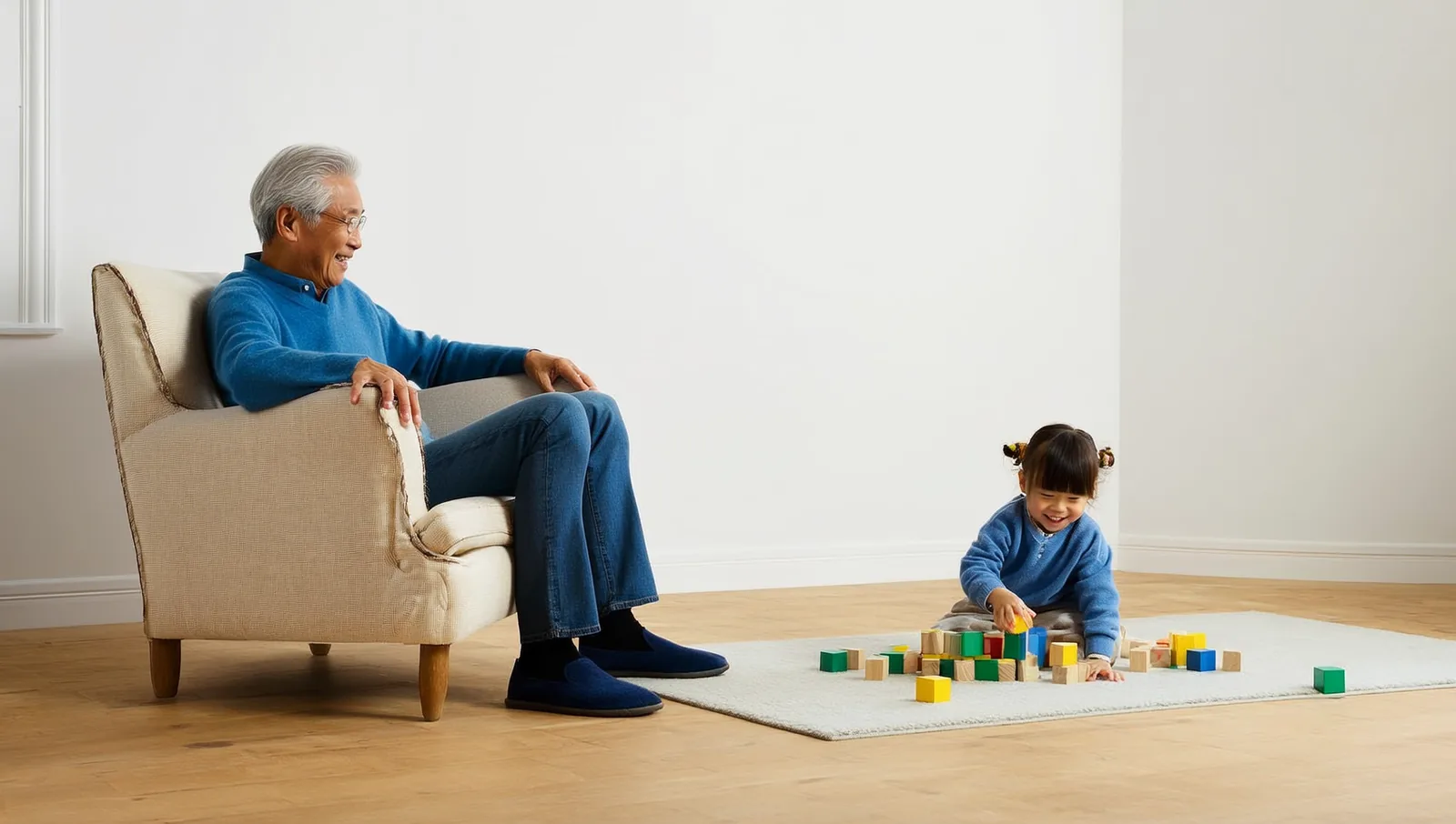
- No kissing a child with eczema while you have an active cold sore. This is the whole rule in one sentence, and it is the one grandparents most often need said out loud. Say it kindly and say it early, before a visit rather than during one.
- Nothing shared that touches saliva. Cups, cutlery, food, lip balm, toothbrushes, towels, washcloths, bedding.
- Do not touch the sore, and wash your hands often if you have one, especially before any contact with the child.
- Tell childcare and school. A caregiver with a cold sore should know to keep their distance from that child until it has fully crusted and healed.
- Teach handwashing to the child too, particularly when a family member or classmate has a visible cold sore.
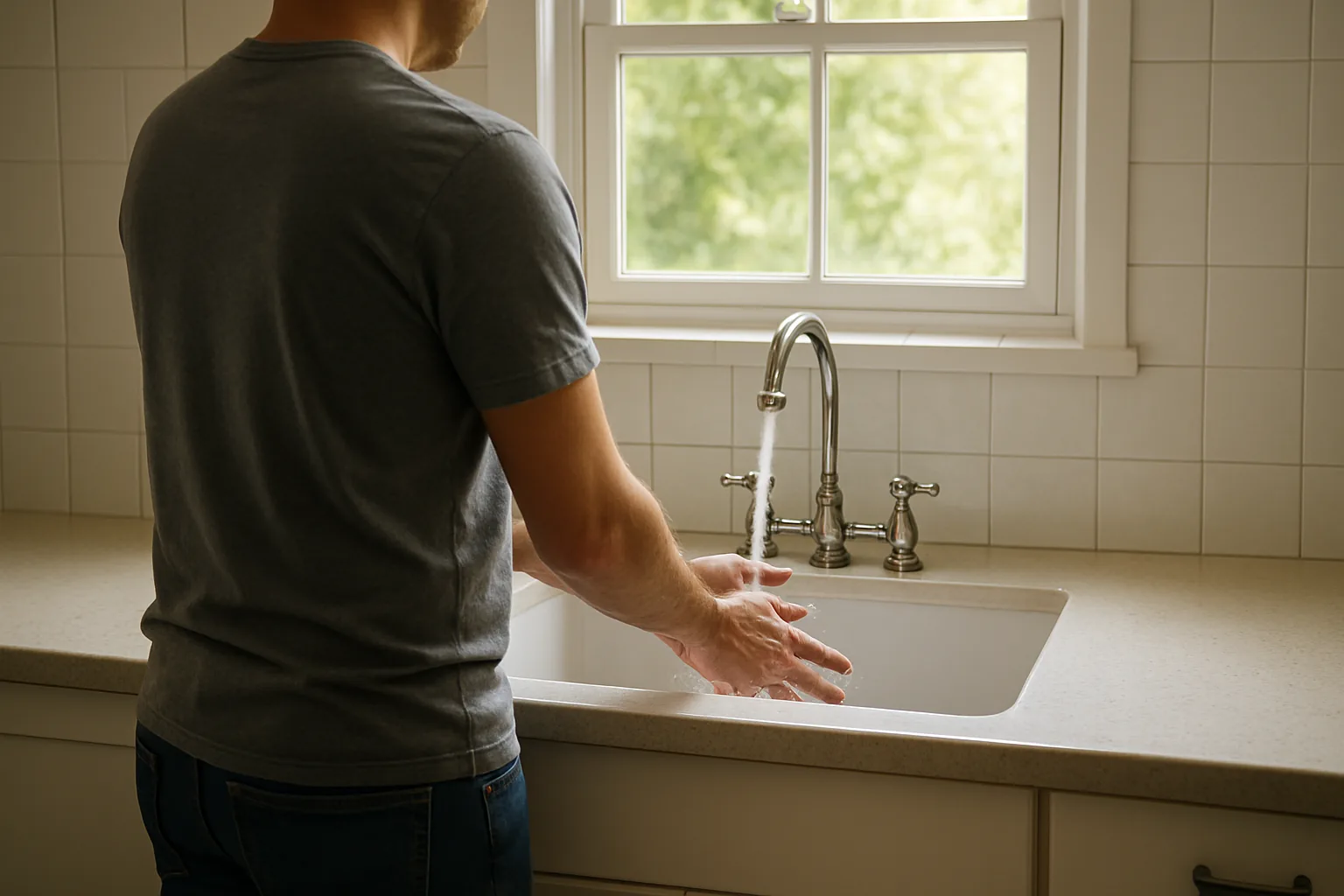
Note the uncomfortable caveat: HSV-1 can shed without a visible sore, so these rules reduce risk rather than eliminate it.
The best long-term protection is boring
The most effective thing you can do sits outside this article entirely. An intact skin barrier is far harder for HSV-1 to breach, so consistent daily emollient use and prompt, adequate treatment of flares are themselves an infection prevention strategy, not just a comfort measure.
That reframing is useful. Parents tend to think of moisturizing as itch control, something optional on a good week. It is also the wall. For children whose eczema stays severe despite a solid routine, getting the disease properly controlled, including with biologics or JAK inhibitors where a dermatologist thinks it appropriate, reduces the amount of broken skin available for a virus to colonize. And if you are still working out which type of eczema you are dealing with, our guide to the seven types is the place to start.
The bottom line
Eczema herpeticum is uncommon, and most children with eczema will never get it. But it is the one complication where a few hours of recognition genuinely changes the outcome. Learn the picture: clustered same-sized blisters, punched-out round sores, pain instead of itch, fever, a child who seems unwell. Do not reach for the steroid tube. Call the same day, mention any cold sore in the household, and get eyes on the rash.
Every child’s skin is different, and this article is not a substitute for examination by a board-certified dermatologist or your child’s pediatrician. But knowing what you are looking at is what buys you the time to reach them.
Further reading (sources)
- Everyday Health on why a cold sore can be dangerous for children with atopic dermatitis
- Cleveland Clinic for a clinical overview of eczema herpeticum
- American Academy of Dermatology with guidance on keeping a child with eczema away from cold sores
- HealthyChildren.org from the American Academy of Pediatrics, explaining cold sores and herpes simplex virus in children
- National Eczema Association on recognizing and treating skin infections in eczema