Baby and Childhood Eczema: The Complete Parent's Guide
Few things rattle a parent like watching a baby claw at raw, itchy skin and feeling unsure how to help. If that is you, you are far from alone. Atopic dermatitis, the medical name for the most common form of eczema, affects up to 25 percent of children, and an estimated 60 percent of people who develop eczema get it within their first year of life. The reassuring news is that while there is no cure, most childhood eczema can be well controlled, and many children improve dramatically or grow out of it by the time they start school.
This guide is the hub for what a parent needs from the newborn months through the school years: how eczema looks at different ages, the daily skincare that does most of the work, how to spot and sidestep triggers, the treatments approved for children, and the new pediatric guidelines shaping care in 2026. Where a topic deserves its own deep dive, you will find a link to it.
How eczema shows up at different ages
Eczema does not look the same at six months as it does at six years.
- Babies (under 1): it often starts on the cheeks, forehead, and scalp, then spreads to the outer arms and legs. The skin is dry, itchy, and inflamed, looking pink or red on lighter skin and brown, gray, or purple on darker skin. (Cradle cap on the scalp can show up around the same time, though it is a separate condition.)
- Toddlers and young children: the rash tends to migrate into the skin creases, inside the elbows and behind the knees, plus the wrists, ankles, and neck. Constant scratching can thicken the skin over time.
- School age and beyond: flares often settle into those same creases and onto the hands, and stress begins to play a bigger role as a trigger.
If you are not even sure the rash is eczema, our guide to the seven types of eczema walks through how atopic dermatitis differs from its look-alikes.
What the new AAD pediatric guidelines say
In April 2026, the American Academy of Dermatology released its first guidelines focused specifically on atopic dermatitis in children, alongside a companion set of recommendations on prevention. The management guideline distills the evidence into 27 recommendations, and the headline for parents is reassuring: the backbone of care is simple, consistent skincare, with prescription treatments layered on only when they are needed.
One question the prevention guidance tackles is whether you can stop eczema before it ever starts, an appealing idea if eczema runs in your family. Here honesty matters. Large trials that asked parents to apply daily moisturizer to high-risk newborns did not prevent eczema from developing. So moisturizing is the foundation of treating eczema, but it is not a proven shield against ever getting it. What you can do is treat early and treat well, which keeps flares smaller and may matter for the atopic march, the tendency for early eczema to precede food allergy, asthma, and hay fever.
Daily skincare: the part that does the heavy lifting
Ask any pediatric dermatologist and they will tell you the same thing: the daily routine matters more than any single product. The technique is often called soak and seal.
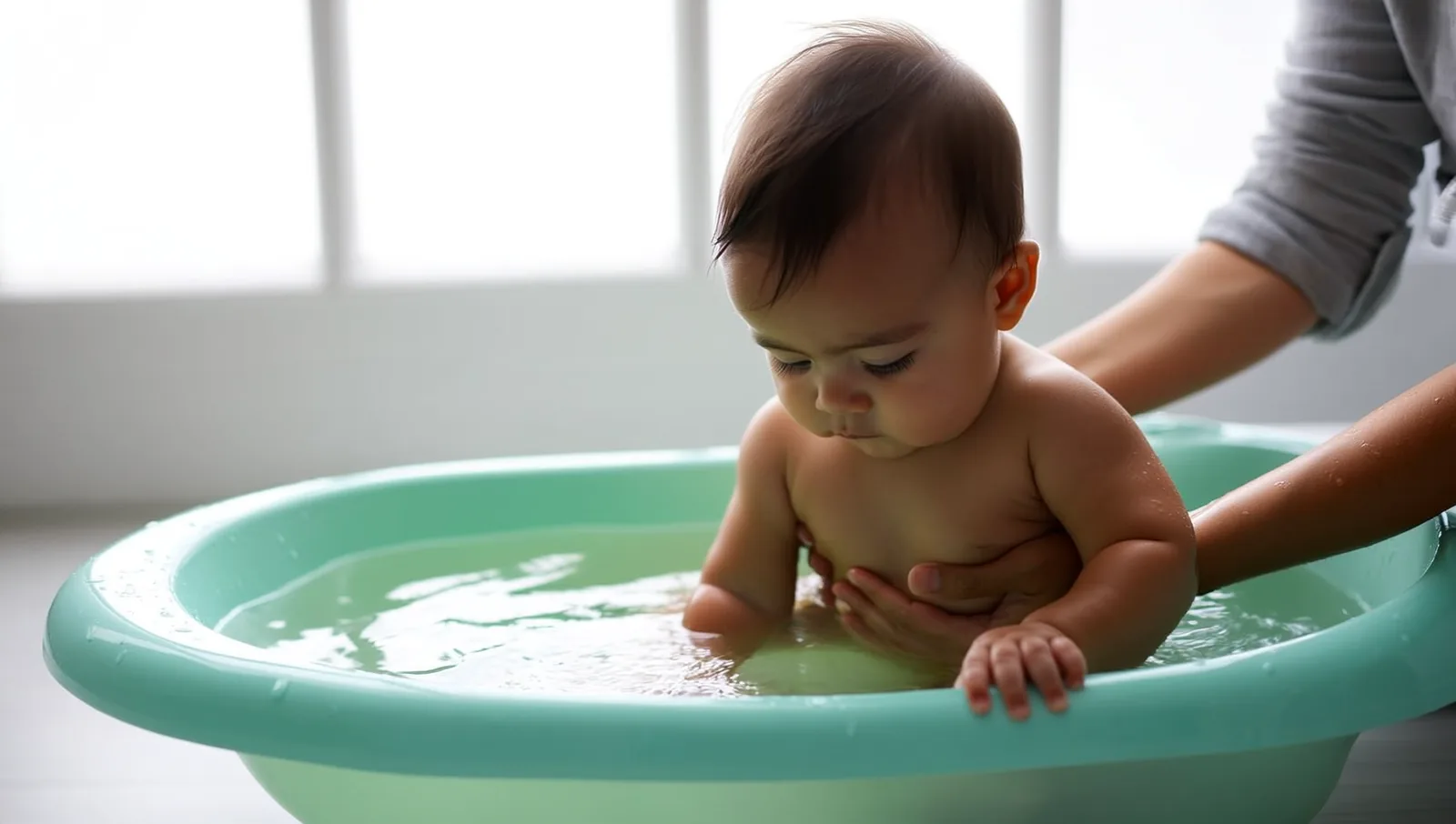
- Bathe smart. A short lukewarm bath, roughly five to 10 minutes, every day or every other day. Use a mild, fragrance-free, nonsoap cleanser, and only on the parts that are dirty or smelly. Skip the scrubbing.
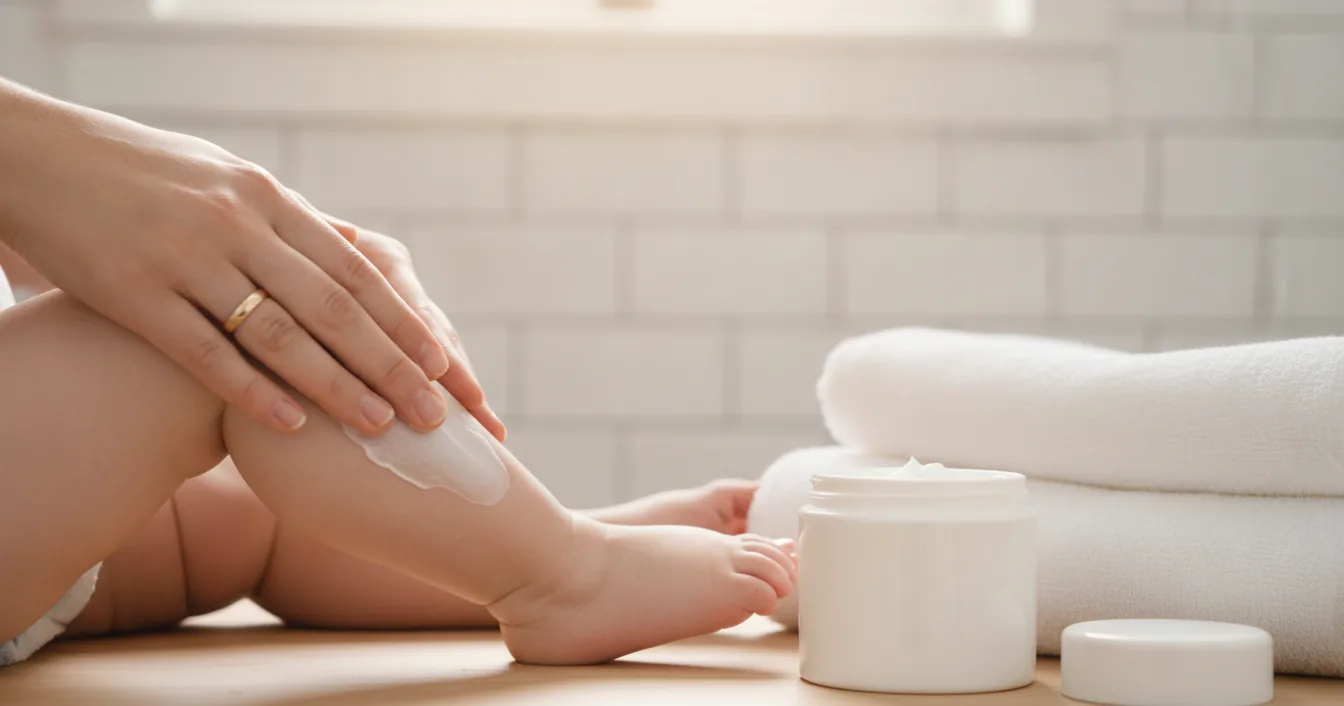
- Seal in moisture fast. Within a few minutes of lifting your child out, gently pat (do not rub) the skin and apply a fragrance-free moisturizer while it is still damp. Thick creams and ointments, including plain petroleum jelly, hold water in far better than thin lotions or oils.
- Moisturize often. At least twice a day, and more during flares. Diaper changes make an easy reminder for babies. Keep going even when the skin looks calm, because stopping is what invites the next flare.
- Protect the skin from scratching. Try a new moisturizer on a small patch first, keep nails trimmed short, and consider soft cotton mittens at night so scratching does the least damage.
Knowing your child’s triggers
A trigger can spark a brand-new flare or worsen one already underway. Most fall into a few groups:
- Bodily: sweat, saliva, and scratching. If drool is irritating the skin around the mouth, a swipe of plain petroleum jelly before feedings and naps can act as a barrier.
- Environmental: dry air, sudden temperature swings, tobacco smoke, pet dander, and pollen.
- Products: fragranced soaps and shampoos, laundry detergent, fabric softeners, baby wipes, and scratchy fabrics like wool.
Triggers also shift as kids grow. Heat and sweat can flare eczema during gym class and sports, pool chlorine can irritate, and by the tween and teen years stress becomes a common culprit. None of this means your child has to sit out childhood. With a few precautions, most kids with eczema swim, play sports, and head off to school just fine.
Treatments approved for children
When good skincare is not enough on its own, dermatologists add anti-inflammatory medicine, almost always starting with the gentlest option that works.
- Topical corticosteroids are the long-standing first-line treatment for flares. They calm inflammation and itch. Because babies absorb more medicine through the skin than adults do, follow your dermatologist’s instructions on strength, amount, and how long to use them.
- Steroid-sparing topicals such as the calcineurin inhibitors (tacrolimus, pimecrolimus) and crisaborole are useful for delicate areas like the face and for longer-term control. Newer topical options for stubborn cases keep arriving, so see our explainer on a new topical for pediatric hand eczema.
- Biologics and other systemic medicines. For moderate to severe eczema that resists topicals, the biologic dupilumab is approved for children as young as six months, and other biologics and JAK inhibitors are expanding the options for older children.
Never stop a prescribed medicine on your own. If a treatment worries you, talk it through with your child’s doctor first.
Food allergy, growth, and sleep
Eczema rarely travels alone. Babies with moderate to severe eczema are the most likely to develop a food allergy, which is why early, guided introduction of allergenic foods (done with your doctor, never on your own) can matter so much. The fuller story lives in our piece on the atopic march.
The toll you cannot see is just as real. Relentless nighttime itch fragments sleep for the whole family, and poorly controlled eczema can even nudge a child off their growth curve. In analyses of the pivotal pediatric dupilumab trials, children aged 6 to 11 with severe eczema were more likely to show catch-up growth once their disease was brought under control, an effect not seen in teenagers. Part of that is avoiding long stretches of high-dose steroids, and part may simply be the body doing better once the inflammation, itch, and sleep loss ease. It is one more reason to treat significant eczema promptly rather than waiting it out.

When to call the doctor
Broken, scratched skin is an open door for infection, and children with eczema are especially prone to it. Seek medical care promptly if you see:
- Pus-filled blisters, weeping sores, or yellow-orange crusting
- A rapidly spreading rash, particularly alongside a fever
- Painful clusters of small blisters, which can signal a herpes infection (eczema herpeticum) that needs urgent treatment
Also check in if the eczema is not improving with your routine, is wrecking your child’s sleep, or is simply wearing your family down.
The bottom line
Childhood eczema can feel relentless, but the path through it is well mapped. Gentle daily bathing and generous moisturizing form the foundation, trigger awareness heads off flares, and a stepwise set of treatments handles the rest, with help available for even the most stubborn cases. Most children improve as they grow, and many outgrow baby eczema by the age of three to five. Because every child’s skin is different, build your plan with a board-certified dermatologist or pediatric allergist, and lean on them whenever you need to adjust it. A flare is not a sign you are failing. You are managing a condition, and you have more tools to do it with than ever.
Further reading (sources)
- American Academy of Dermatology on how to treat eczema in babies
- American Academy of Dermatology for finding and avoiding your child’s eczema triggers
- Mayo Clinic with practical advice on bathing and moisturizing baby eczema
- Happi reporting the AAD’s first pediatric atopic dermatitis guidelines
- HealthDay on the new recommendations for preventing and managing pediatric eczema
- MedPage Today covering catch-up growth in children treated for eczema