The Atopic March: How Eczema Connects to Food Allergy, Asthma, and Hay Fever

Many parents spot the pattern long before they hear its name. The eczema comes first, often in the early months, dry and itchy patches that never quite settle. Then a reaction to egg or peanut. A couple of years on, a nose that runs every spring, and eventually a cough and wheeze the pediatrician calls asthma. It can feel like a run of unrelated bad luck. To an allergist, it often looks like a single story unfolding in a familiar order.
That story has a name: the atopic march.
The atopic march (sometimes called the allergic march) is the tendency for allergic conditions to appear in sequence through childhood. It usually begins with atopic dermatitis, the most common form of eczema, and food allergy in infancy, then progresses toward allergic rhinitis (hay fever) and asthma in later childhood. Not every child marches, and the order is not fixed. But the link is real, and it changes how we think about eczema. The skin is not just where the trouble starts. It may be one of the places the whole allergic process is switched on.
A sequence, not a coincidence
For a long time, doctors treated eczema, food allergy, hay fever, and asthma as separate problems that happened to cluster in the same families. The current view, supported by large long-term studies, is that they are often connected, with each step helping to set up the next.
The classic timeline looks like this. Atopic dermatitis and food allergy tend to appear first, in the first year or two of life. Allergic rhinitis and asthma usually arrive later, through the preschool and school-age years. Researchers describe it as a progression from a skin and gut problem in infancy to airway and nasal disease in childhood.
A few caveats keep this honest. The march is a tendency, not a guarantee. Plenty of children have eczema and never develop the rest, and some develop asthma or hay fever without ever having had eczema. The conditions can also overlap or appear out of order. Think of the march as a well-worn path that many children follow, not a track every child is locked onto.

What the numbers actually show
The size of the link surprises people. In a large analysis of United States insurance records, researchers compared more than 27,000 infants diagnosed with atopic dermatitis before their first birthday against more than 55,000 children without early eczema. The differences by later childhood were striking:
- Asthma developed in about 19 percent of the eczema group, versus roughly 9 percent of the others.
- Allergic rhinitis appeared in about 28 percent, versus about 13 percent.
- Food allergy showed up in 16 percent, versus just over 2 percent.
- The full “atopic triad” of asthma, hay fever, and food allergy together affected nearly 11 percent of the eczema group, against under 1 percent of children without early eczema.
Read those last figures again. Early eczema was tied to a roughly tenfold jump in carrying all three conditions at once. That does not mean a baby with eczema is destined for asthma. It means the risk is meaningfully higher, and worth keeping on your radar.
Why the skin comes first
Why would a skin condition raise the odds of trouble in the nose, lungs, or gut? The leading explanation puts the skin barrier at center stage.
Healthy skin works like a sealed brick wall that keeps moisture in and the outside world out. In atopic dermatitis that wall is leaky, often because of mutations in the gene for filaggrin, a protein that helps build the barrier. (Our guide to the types of eczema covers how this barrier defect defines atopic dermatitis.) Through that compromised barrier, the immune system meets food proteins and environmental allergens such as dust mite, pet dander, and pollen in the worst possible setting: inflamed, broken skin.
This is the heart of what scientists call the dual-allergen exposure hypothesis. When a baby first meets a food protein by eating it, the gut tends to teach tolerance. When that same protein reaches the body through cracked, inflamed skin, the immune system is more likely to read it as a threat and build allergic antibodies (IgE) against it. The skin, in effect, can sensitize a child to foods they have not even eaten yet.
Inflamed skin does more than let allergens in. It releases alarm signals, including a messenger called thymic stromal lymphopoietin (TSLP), that push the immune system toward its “type 2” allergic mode and even drive the itch directly through skin nerves. That type 2 response does not stay local. It primes the whole body, setting the stage for allergic reactions in the airways and nose later on. Add in colonization by Staphylococcus aureus, the bacteria common on eczema skin, and the inflammatory push grows stronger still.
Who is most likely to march
The march is not equally likely for everyone with eczema. Research points to a handful of features that raise the odds:
- Early onset. Eczema that begins in the first months of life carries more risk than eczema that shows up later.
- Severity. Moderate to severe eczema is a far stronger predictor than mild disease. In the insurance-records study, severe disease more than tripled the risk of developing the full triad.
- Family history. A parent or sibling with eczema, asthma, hay fever, or food allergy raises the odds substantially.
- An early food allergy. A baby who already has both eczema and a food allergy is on a faster, higher-risk track toward asthma and allergic rhinitis at school age.
- Genetics. Filaggrin mutations and other barrier-related genes show up repeatedly in children who march.
If several of these describe your child, it is worth a conversation with a pediatric allergist or dermatologist about what to watch for.
Can the march be interrupted?
This is where research is most active, and where honesty matters most. The appealing idea is that if leaky skin starts the march, protecting the barrier from birth might stop it. Unfortunately, large trials that had parents apply daily moisturizer to high-risk newborns did not prevent eczema from developing, so “moisturize every baby” is not a proven shield against the march.
Two threads are more promising. First, controlling established eczema well, calming the inflammation rather than just the surface dryness, makes sense on its own terms and is being studied as a way to lower later allergy risk. The systemic type 2 inflammation that links these conditions is exactly what newer biologic and JAK inhibitor treatments target, and researchers are watching closely to see whether treating the skin aggressively changes what happens downstream.
Second, for the food allergy arm specifically, the evidence is strong and has already rewritten guidelines. The landmark LEAP trial enrolled infants 4 to 11 months old with severe eczema, egg allergy, or both, exactly the high-risk group, and found that introducing peanut early cut the rate of peanut allergy dramatically, from about 35 percent in the avoidance group to about 11 percent in the early-introduction group. Early, guided introduction of allergenic foods is now recommended for many high-risk infants rather than the old advice to wait and avoid.
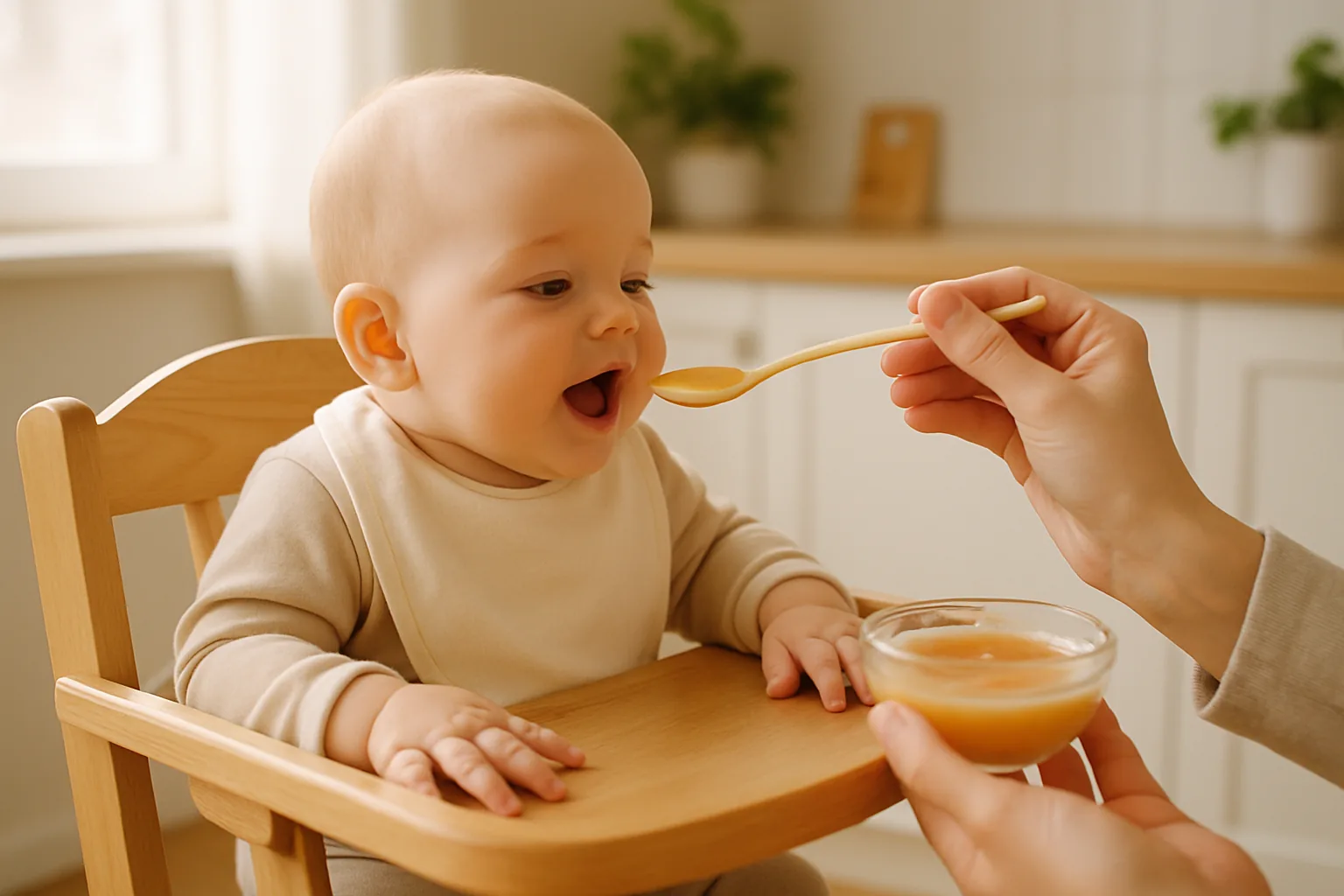
One important caution comes with that good news. Babies with eczema are the very children most likely to have or develop a food allergy, so do not start peanut or egg on your own if your child has moderate to severe eczema. Talk to your doctor first, who may recommend allergy testing or a supervised first taste.
What this means for your family
If you are the parent of a baby with early, stubborn eczema, the atopic march is not a reason to panic. It is a reason to take the skin seriously and stay alert. Keep eczema as calm as you can with consistent barrier care and your doctor’s treatment plan. Ask your pediatrician about the right timing for introducing allergenic foods. And mention any feeding reactions, recurrent wheeze, or relentless nasal symptoms early, because catching the next step sooner usually makes it easier to manage.
If you are an adult looking back on your own cluster of eczema, hay fever, and asthma, the march helps explain why they travel together. They are not three separate strokes of bad luck. They are branches of the same atopic tree.
The bottom line
The atopic march describes a real and well-documented pattern: early-onset eczema, especially when it is severe, raises the odds of food allergy, hay fever, and asthma down the line. The thread connecting them runs through a leaky skin barrier and a primed type 2 immune system. We cannot yet promise that treating eczema will halt the march, but good skin control matters for quality of life right now, and early food introduction can genuinely lower food allergy risk in high-risk infants. As always, eczema care is highly individual, so let a board-certified dermatologist or allergist help you build the plan that fits your child, or you.
Further reading (sources)
- National Eczema Association on how eczema can lead to allergies and asthma
- Journal of the American Academy of Dermatology for risk factors and timing of the march in early-onset eczema
- Children with a current overview of what drives the atopic march
- Journal of Clinical & Cellular Immunology explaining how the skin barrier sets up later airway disease
- The Journal of Allergy and Clinical Immunology: In Practice on how food allergy speeds march progression
- New England Journal of Medicine reporting the LEAP trial on early peanut introduction
- American Academy of Dermatology for an overview of atopic dermatitis